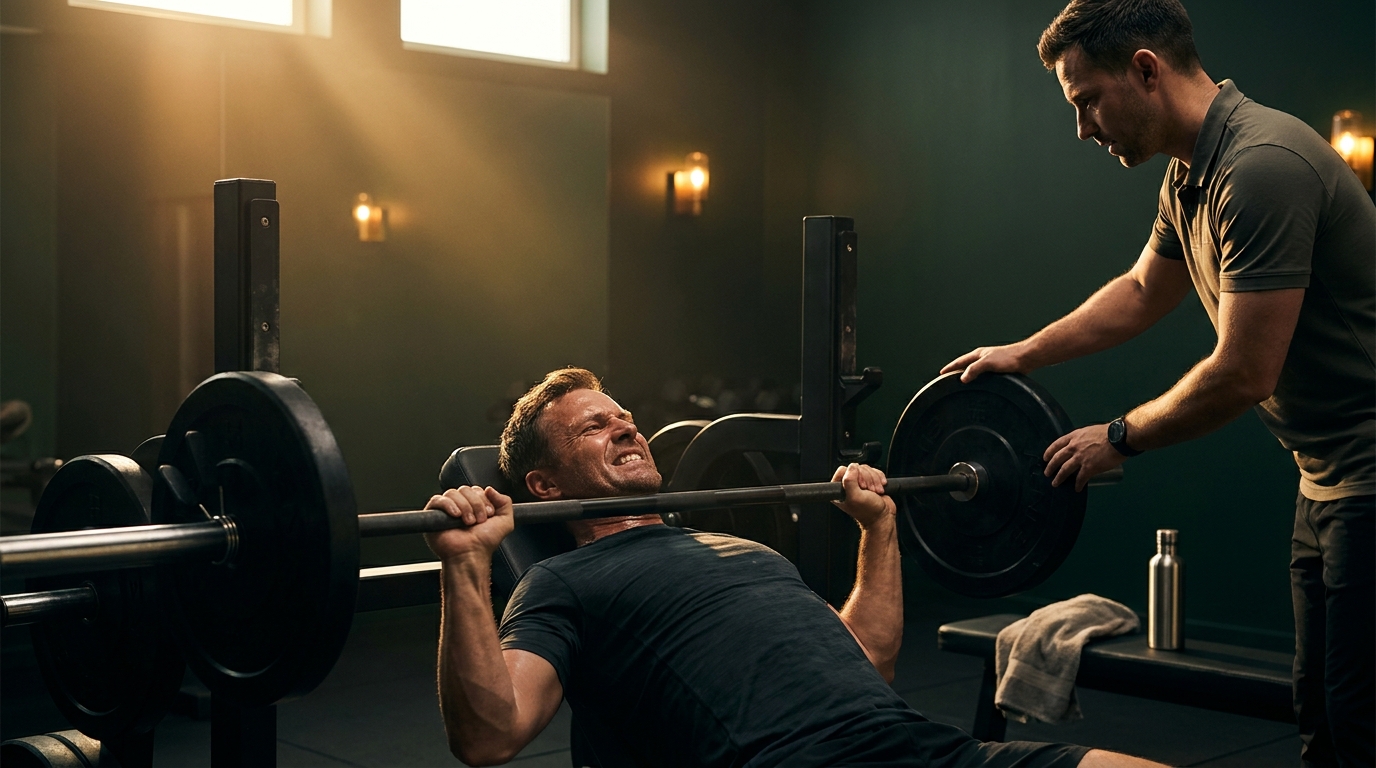
Summer training does not need to be less serious. It needs a plan that stops the heat from making the decisions.
Training in Summer Heat in Massanassa: How to Adapt Your Gym Plan without Losing Strength
Author
Alphafit Team
Editorial team at Alphafit Gym Massanassa
Reviewed by
Alphafit Technical Coaching Team
Strength training and personal coaching team in Massanassa
When the heat arrives in Valencia, many gym members notice the same thing: the same weight feels heavier, your heart rate rises sooner, rest periods feel too short, and training at your usual time no longer feels the same.
That does not mean you need to abandon the gym until September. It means summer needs its own strategy.
At Alphafit Gym Massanassa, the goal is simple: keep strength training with good judgment. Maintain the habit, protect performance, and adjust intensity, hydration, and timing so the heat does not turn every workout into a fight.
Heat is not just discomfort
Recent summers have become increasingly demanding. AEMET reported that summer 2025 was the hottest in Spain’s historical series, with 33 heatwave days. In the Valencian Community, anyone who trains, works, or walks in the mid-afternoon knows that this is not just a headline.
When you train in the heat, your body has to divide resources: moving weight, regulating temperature, sweating, controlling heart rate, and recovering between efforts. That is why a workout that felt normal in March can feel much harder in July.
The solution is not to train scared. It is to stop judging the session only by the weight on the bar and start accounting for context too: temperature, sleep, hydration, time of day, and accumulated fatigue.
The priority: consistency, not heroics
The WHO recommends that adults do regular physical activity, including muscle-strengthening work for major muscle groups at least 2 days per week. That foundation still matters in summer.
What changes is how you get there.
On very hot days, a well-controlled 45-minute session may make more sense than forcing a long routine with worse and worse rest periods. It may also be better to keep 2 or 3 solid strength sessions than promise yourself 5 days and then miss them because you are drained.
If you need to rethink your schedule, our guide to the best time to train in Massanassa can help you choose between morning, midday, and evening without relying on a perfect week.
Hydration starts before you enter the gym
The common mistake is remembering water only when your mouth is already dry. In summer, that signal can arrive late.
Spain’s Ministry of Health recommends drinking fluids frequently even when you are not thirsty, avoiding alcohol, and not overdoing drinks high in caffeine or sugar. The CDC gives similar advice for exercising in the heat: drink more water than usual and do not wait until you are thirsty.
For a strength session, think in three moments:
- Before: arrive hydrated, not just carrying a bottle.
- During: take small sips between blocks or exercises, especially if you sweat heavily.
- After: replace fluids and eat something sensible if the session was intense or you have gone many hours without food.
You do not need to make this complicated every day. But water, a towel, and a light meal should be part of the plan, just like your training shoes.
How to adjust strength training when the heat rises
You do not need to throw away progression in summer. You just need to make it smarter.
Downshift on the hardest days
If you arrive at the gym sleepy, overheated, or worn down by the day, do not force the same performance you expect on your best day. Keep the main exercises and adjust one of these variables:
- remove 1 set per exercise,
- leave 2 or 3 reps in reserve,
- extend rest periods,
- reduce load by 5-10%,
- or swap a heavy accessory for a more controlled variation.
That is not weak training. It is protecting the whole week.
Rest longer than your ego wants
In hot conditions, heart rate can take longer to settle between sets. If you start the next set while still too elevated, technique breaks down earlier and the weight feels worse.
For main lifts like squats, leg press, Romanian deadlifts, presses, or hip thrusts, rest long enough to repeat with good execution. Do not turn every strength session into a circuit because you feel impatient.
Keep the warm-up, but keep it purposeful
Hot weather does not automatically prepare your joints, technique, or nervous system. Warm up properly, but with intent: a few minutes of general movement, useful mobility, and progressive ramp-up sets.
If you train with limited time, combine that with a more efficient structure like our guide to time-efficient training in Massanassa.
Cardio in summer: control beats punishment
Cardio can still have a place, but not every form of cardio carries the same cost when it is hot.
If your main goal is to build strength, lose fat without burning yourself out, or improve health, many weeks will work better with:
- walking earlier or later in the day,
- easy bike or treadmill work in a comfortable zone,
- less HIIT on extreme heat days,
- separating hard cardio from heavy leg training,
- and using heart rate as feedback, not punishment.
Our guide to smart cardio with heart-rate zones explains how to organize this without turning every session into a survival test.
Signs you should stop or slow down
This is not the place to act tough. The CDC recommends stopping activity and getting to a cool place if you feel faint or weak while exercising in hot weather. Spain’s Ministry of Health also notes that high temperatures can contribute to cramps, dehydration, sunstroke, and heat stroke.
Slow down or stop if you notice:
- dizziness or feeling faint,
- a worsening headache,
- nausea,
- unusual weakness,
- strong cramps,
- confusion,
- very hot skin,
- or a heart rate that feels out of control for the effort.
If symptoms are intense, consciousness is altered, or heat stroke is suspected, seek medical help. Training can wait.
A sensible summer training week
A useful week for someone who wants to maintain strength in Massanassa could look like this:
| Day | Plan |
|---|---|
| Monday | Full-body strength with moderate loads |
| Tuesday | Walk or easy cardio at a cooler time |
| Wednesday | Upper/lower strength with longer rests |
| Thursday | Active recovery, mobility, or steps |
| Friday | Strength with fewer accessories if it is very hot |
| Saturday | Easy cardio, class, or optional short session |
| Sunday | Real rest |
The point is not to copy the table exactly. It is to understand the logic: strength first, controlled cardio, room to recover, and flexibility when the heat rises.
What we do at Alphafit when summer arrives
At Alphafit, we do not treat July like February. If someone arrives tired, sweating more, sleeping worse, or training in a difficult time slot, the plan adapts.
We can adjust:
- number of exercises,
- load and reps,
- rest periods,
- order of strength and cardio,
- weekly frequency,
- and session goals.
The goal is to keep stacking good weeks. Not to win one workout and lose the next three.
If you want to train this summer with a routine that respects your schedule, your level, and the real heat of Valencia, visit Alphafit Gym Massanassa or write to us through contact. We will help you keep progressing without improvising every time the temperature climbs.
Sources
- El verano de 2025 fue el más cálido de la serie histórica · Agencia Estatal de Meteorología
- Combatir el calor está en tus manos · Ministerio de Sanidad
- Heat and Athletes · Centers for Disease Control and Prevention
- Physical activity · World Health Organization