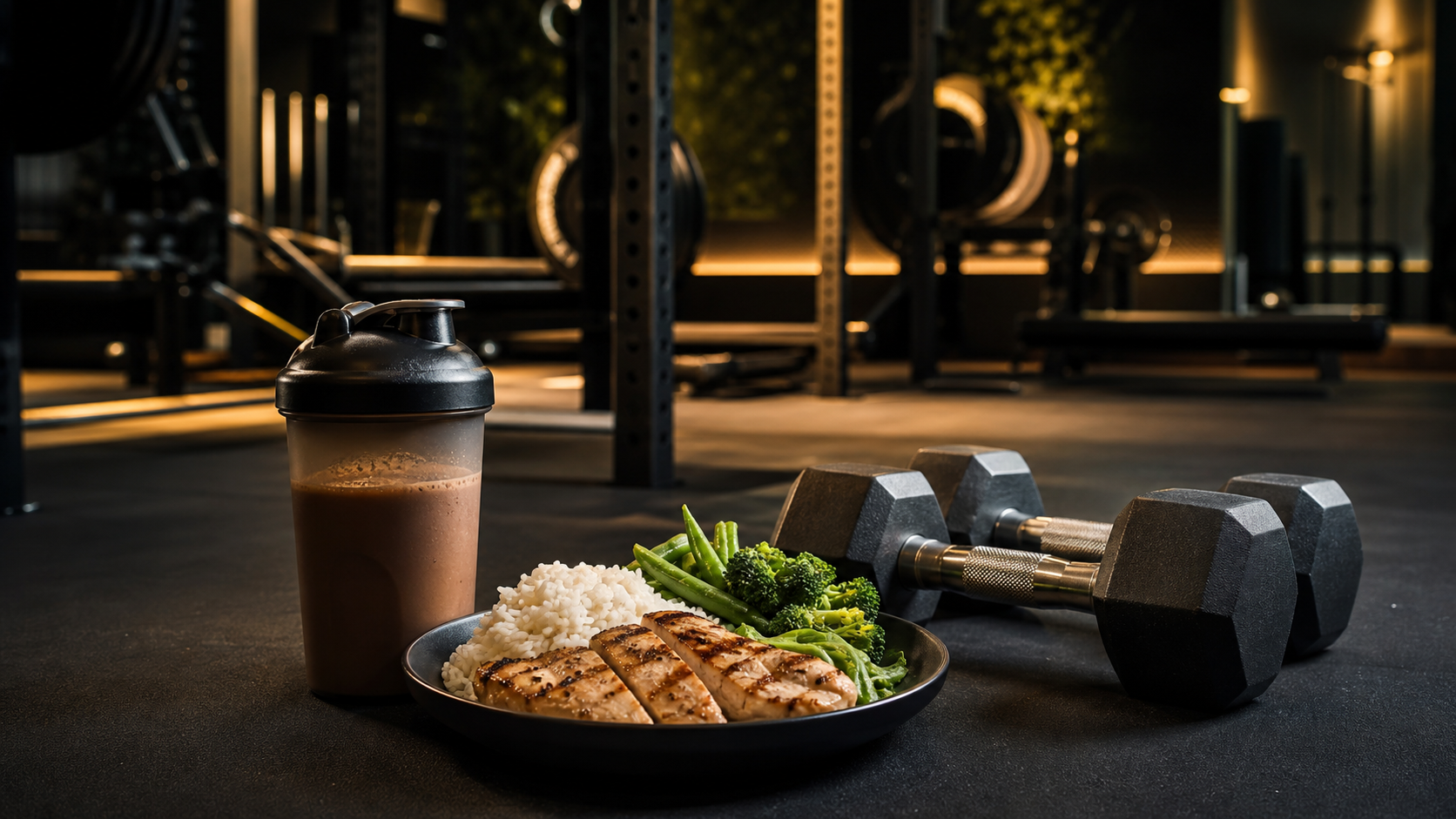
Protein works best when it fits into a well-planned strength week, repeatable meals and enough energy to train properly.
How Much Protein Do You Need for Strength Training in Massanassa?
Author
Alphafit Team
Editorial team at Alphafit Gym Massanassa
Reviewed by
Alphafit Technical Coaching Team
Strength training, body recomposition and personal coaching team in Massanassa
Protein has become one of the most common gym questions: how much do I need, do I need shakes, is it better after training, and will eating more protein speed up results?
At Alphafit Gym Massanassa, we hear this all the time. Someone trains strength three days per week, starts eating better and suddenly gets pulled between videos promising muscle from more protein and advice that turns every meal into maths.
The useful answer sits in the middle: protein matters, but it does not work alone. It helps repair and build muscle tissue, maintain lean mass when you lose fat and keep daily hunger under better control. But it still needs strength training, enough energy, recovery and consistency.
The Short Answer
For most healthy people who strength train, a practical reference is usually 1.4 to 2.0 g of protein per kilogram of body weight per day. The International Society of Sports Nutrition position stand places this range as useful for physically active people who want to build or maintain muscle mass.
If you are in a calorie deficit, want to lose fat without losing muscle or train with fairly high volume, moving toward the higher end can make sense, as long as digestion, adherence and your real context fit.
In plain numbers:
| Body weight | Practical daily range |
|---|---|
| 60 kg | 84-120 g protein |
| 75 kg | 105-150 g protein |
| 90 kg | 126-180 g protein |
You do not need to hit the exact number every day. It is better to be close most of the time with repeatable meals than to chase a decimal.
If you have kidney disease, a medical nutrition plan, pregnancy, relevant medication or any specific clinical situation, do not improvise: speak with a healthcare professional or registered dietitian.
Why Protein Matters When You Strength Train
Strength training is the signal. Protein provides part of the materials. Recovery lets the process settle.
When you train legs, back, chest or full body with progressive loads, you create a stimulus the body has to repair and adapt to. If daily protein is too low for weeks, it is usually harder to:
- recover well between sessions;
- maintain muscle during fat loss;
- progress loads and reps;
- manage hunger during a calorie deficit;
- sustain demanding training without constant ups and downs.
A meta-analysis in the British Journal of Sports Medicine found that protein supplementation can improve gains in fat-free mass and strength in people doing resistance training, especially when it helps them reach a sufficient total daily intake (Morton et al.). The practical takeaway is not “you must take shakes.” It is: first make sure the daily total is covered.
If your goal is muscle gain, this article complements our nutrition guide for muscle mass. Here we zoom in on protein without turning food into a permanent spreadsheet.
How to Calculate Your Target Without Obsessing
Start with body weight and your real goal.
If You Are Starting or Just Want to Train Better
Aim around 1.4-1.6 g/kg/day. For a 75 kg person, that is roughly 105-120 g per day.
This range already encourages better breakfasts, lunches and dinners without needing strange strategies.
If You Want to Build Muscle
Think 1.6-2.0 g/kg/day. Not because more protein magically creates muscle, but because it helps support the process alongside progressive training, enough calories and sleep.
If you train well but eat too little, building is harder. If you eat a lot but train without progression, it is still harder.
If You Want to Lose Fat Without Losing Muscle
Here protein becomes more important. An aggressive deficit, lots of cardio and little strength training is a classic recipe for looking smaller and performing worse.
As a practical starting point, use 1.6-2.2 g/kg/day, strength train 2-4 days per week and keep the deficit moderate. This connects directly with our guide to body recomposition in Massanassa.
Spread It Across the Day
The daily total matters most, but distribution helps.
For most people, protein works well spread across 3 or 4 clear servings through the day. It does not need to be perfect. It needs to be easy to repeat.
Example for someone aiming for about 120 g per day:
| Time | Option |
|---|---|
| Breakfast | Greek yogurt or eggs with bread and fruit |
| Lunch | Chicken, fish, legumes or tofu with rice/potato and vegetables |
| Snack | Fresh cheese, yogurt, a simple sandwich or a shake if useful |
| Dinner | Omelette, fish, turkey, tempeh or legumes with a side |
Sports nutrition is not just a post-workout window. The joint position on nutrition and athletic performance emphasizes matching energy, macronutrients and timing to the exercise type, goal and individual tolerance. For a gym member, that means a protein-rich dinner counts, a well-built lunch counts and a shake only makes sense if it solves a real gap.
Foods That Make It Easier
You do not need a bodybuilder diet to reach enough protein. You need clear sources, sensible portions and meals you can sustain.
| Source | When it often fits |
|---|---|
| Eggs and egg whites | Quick breakfast or dinner |
| Chicken, turkey, lean beef | Batch-cooked lunches |
| Fish and seafood | Light dinner or main meal |
| Greek yogurt, fresh cheese, milk | Snack or quick breakfast |
| Legumes | Budget-friendly and filling, especially with grains if you want a fuller amino acid profile |
| Tofu, tempeh, textured soy | Plant-based options with good protein density |
| Whey or plant protein | Convenience when normal food is not enough |
The key is not to look only at protein. A useful strength-training meal should also give you energy, micronutrients, fiber and good digestion.
Do Not Turn Protein Into a War on Carbs
A very common mistake is raising protein while cutting almost all carbohydrates. At first it may look like fast “definition”, but in the gym this often happens:
- leg and back sessions feel flat;
- cardio feels heavier;
- night cravings appear;
- load progression gets harder;
- and any intense session costs twice as much.
Carbs are not mandatory at every meal, but they are often useful when you train hard. Rice, potatoes, bread, oats, fruit or pasta can fit perfectly if the day as a whole makes sense.
If your main problem is arriving at the gym with no energy, read what to eat before training in Massanassa.
Do You Need a Protein Shake?
Not necessarily.
A shake is not better than real food. It is more convenient. And that can be a valid reason when:
- you leave work and do not have time for a snack;
- solid breakfast is hard for you;
- you need more protein without cooking another meal;
- you travel or eat out often;
- you are in a fat-loss phase and want an easy-to-measure serving.
The NIH Office of Dietary Supplements sums up the general idea of sports supplements well: they can help in specific situations, but they do not replace an adequate diet or training plan. At Alphafit we translate that simply: if a shake helps you reach your total without pushing out quality food, it can be useful. If you use it to cover a chaotic week, it will not perform miracles.
Common Protein Mistakes
1. Eating Too Little at Breakfast
Coffee and toast can be fine, but if the rest of the day is already tight, you may end up trying to fit all your protein into dinner.
Simple fix: add Greek yogurt, eggs, fresh cheese, turkey, tofu or another option that fits you.
2. Thinking Only About Post-Workout
The meal after training matters, but it does not compensate for an entire disorganized day. Muscle does not live inside a magic 30-minute window.
3. Chasing the Number While Missing the Basics
If you chase 180 g per day but sleep 5 hours, train without progression and restart every two weeks, the priority is somewhere else.
4. Forgetting Legumes Count
It does not all have to be chicken and tuna. Lentils, chickpeas, beans, soy and tofu can be part of a strong diet if you adjust portions and digestion.
5. Buying Supplements Before Structuring Meals
Food, training and sleep first. Then, if convenience is missing, use a shake.
A Simple Day Template
This is not a personalized diet, but it can help you picture a 120-140 g protein day:
| Time | Example |
|---|---|
| Breakfast | Greek yogurt with oats and fruit |
| Lunch | Rice with chicken, vegetables and olive oil |
| Snack | Omelette sandwich or shake with fruit |
| Dinner | Fish with potato and salad, or tofu with vegetables and rice |
If you train in the afternoon in Massanassa, a snack with some carbs and protein usually works better than arriving empty and trying to fix it with coffee.
How We Apply This at Alphafit
When someone tells us “I think I need more protein,” we do not start by selling a supplement.
First we review:
- how many days they strength train;
- whether the routine progresses or changes without structure;
- what breakfast, lunch and dinner look like;
- whether the goal is muscle gain, fat loss or recomposition;
- whether they arrive with energy for sessions;
- and whether the plan fits work, schedule and real life.
Then we adjust the simple pieces: a clear protein source at each meal, sensible portions, carbs around training when needed and a structure that can be repeated.
If you want to organize training and nutrition without obsessing, visit Alphafit Gym Massanassa or write to us through contact. We will help you turn protein into a tool, not another daily doubt.
Sources
- International Society of Sports Nutrition Position Stand: protein and exercise · Journal of the International Society of Sports Nutrition
- A systematic review, meta-analysis and meta-regression of the effect of protein supplementation on resistance training-induced gains in muscle mass and strength in healthy adults · British Journal of Sports Medicine
- Nutrition and Athletic Performance · Journal of the Academy of Nutrition and Dietetics
- Dietary Supplements for Exercise and Athletic Performance · NIH Office of Dietary Supplements