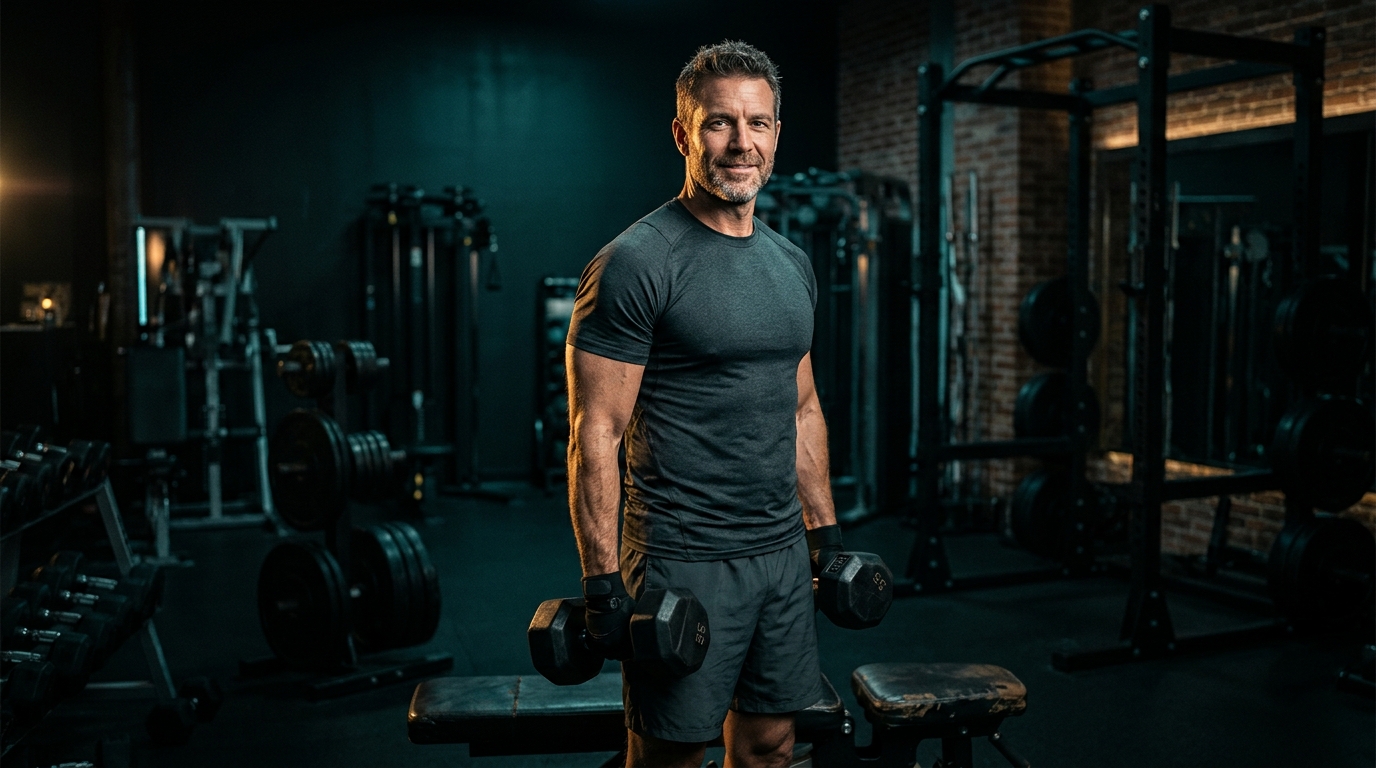
After 40, well-programmed strength work helps preserve muscle, function, and everyday energy.
Strength Training After 40 in Massanassa: How to Build Health, Muscle, and Energy
Updated on April 14, 2026
Author
Alphafit Team
Editorial team at Alphafit Gym Massanassa
Reviewed by
Alphafit Technical Coaching Team
Strength training and personal coaching team in Massanassa
Once people move past 40, many start training with the wrong assumption: that the goal is no longer progress, only “maintenance.”
We do not see it that way.
At Alphafit Gym Massanassa, strength training after 40 is not about slowing down and hoping for the best. It is about training with more structure, protecting muscle, improving daily energy, and giving yourself a better next 10 to 20 years.
That also matches a clear fitness trend from the last week: strength training for longevity, not just aesthetics. More serious fitness coverage keeps returning to the same point: losing muscle, power, and balance with age is not simply “normal” if you train well. In many cases, it is the result of not giving the body the right stimulus.
Why strength matters even more after 40
As the years pass, the body does not suddenly stop adapting. It adapts to what you do — or what you stop doing.
Without strength training, it becomes easier to lose:
- muscle mass,
- bone density,
- work capacity,
- stability and coordination,
- and tolerance for everyday physical stress.
That usually shows up outside the gym before people expect it to: lower energy, more aches, worse posture, and the constant feeling that recovery is getting harder.
The good news is that strength training is still one of the best tools for slowing that decline and, in many cases, reversing part of it.
What actually changes with age
You do not need to train with fear. But you do need to understand what changes.
1. Recovery is less automatic
After 40, there is usually less room for poor sleep, high stress, and repeated hard sessions without consequences.
That makes programming more important.
2. Chaos works worse
Random training works poorly at any age, but especially badly once you no longer recover like a 22-year-old.
3. Basics matter more
You do not need flashy routines. You need a sustainable structure:
- solid exercises,
- stable technique,
- realistic progression,
- enough recovery.
Real benefits of strength training after 40
This is not only about appearance, even though that can improve too. It is about things you feel every day.
More muscle and better body composition
Maintaining or building muscle makes it easier to manage body fat, move well, and avoid big drops in daily energy.
Fewer aches and better posture
A stronger body usually handles work, sedentary time, everyday loading, and life stress better.
Better performance outside the gym
Climbing stairs, carrying bags, playing with your kids, sleeping better, and feeling physically capable all count as performance.
More long-term independence
This is the part many people undervalue. Strength training is not just for summer. It is for future quality of life.
The common mistake: trying to train like you are 20 again
One of the biggest errors is returning to the gym and trying to make up for lost time with too much volume, too much intensity, and no fatigue control.
That usually ends in one of two ways:
- accumulated fatigue,
- or aches that stop training again.
If you are coming back after time away, start with our guide on returning to the gym after a break.
How a 40+ gym member should train for results
The short answer: with a simple base and high-quality execution.
Prioritise big movement patterns
A good routine usually revolves around patterns like:
- squat or a squat variation,
- push,
- pull,
- hip hinge,
- core work,
- and measured conditioning.
Keep something in reserve
You do not need to take every set to failure to progress. In fact, many people over 40 progress better when fatigue is managed well.
If your weekly load is getting too heavy, review our deload week guide.
Train 3-4 days if you can recover from it
For most people over 40, three very good sessions will beat six inconsistent ones.
Combine strength with useful cardio
This is not strength versus cardio. Strength is the base; cardio is a complement when it is programmed properly. Our smart cardio by heart-rate zones guide helps here.
Nutrition and recovery matter even more here
After 40, training and recovery cannot be separated.
Enough protein
If you want to maintain muscle, protein is no longer a small detail. Our muscle-mass nutrition guide can help you get this right.
Reasonable sleep
You do not need perfection, but chronic poor sleep will limit progress.
Stress management
Recovery is not only about the gym. It is also about work stress, mental load, and how you arrive at each week.
What if you have never strength-trained before?
Then this is an even better reason to start properly now.
You do not need an athletic background. You need:
- a realistic starting point,
- supervised technique,
- appropriate loads,
- and progression you can actually sustain.
The biggest risk is not starting late. The biggest risk is delaying it again.
How we approach it at Alphafit Massanassa
At Alphafit Gym Massanassa, we do not treat a 45-year-old like a “broken” version of a 25-year-old.
We treat them like someone who needs better-adjusted programming for their real context:
- current level,
- training history,
- previous aches,
- sleep, stress, and schedule.
From there, we build strength work that is practical, measurable, and sustainable. If you want closer supervision, you can also explore our personal training in Massanassa.
Final takeaway
After 40, strength training stops being optional if you want to move well, feel strong, and age with more control.
Not because you are “getting old,” but because every kilo of muscle, every recovery habit, and every well-planned session matters more now.
You do not need to train like a 20-year-old. You need to train smarter than you did before.
And if you want to do it with real structure, technique, and progression, Alphafit Gym Massanassa can help you build that base.
Sources
- WHO guidelines on physical activity and sedentary behaviour · World Health Organization
- Effects of Resistance Training on Lower-Extremity Muscle Power in Middle-Aged and Older Adults: A Systematic Review and Meta-Analysis of Randomized Controlled Trials · Sports Medicine
- Dietary Protein Intake Is Positively Associated with Appendicular Lean Mass and Handgrip Strength among Middle-Aged US Adults · The Journal of Nutrition