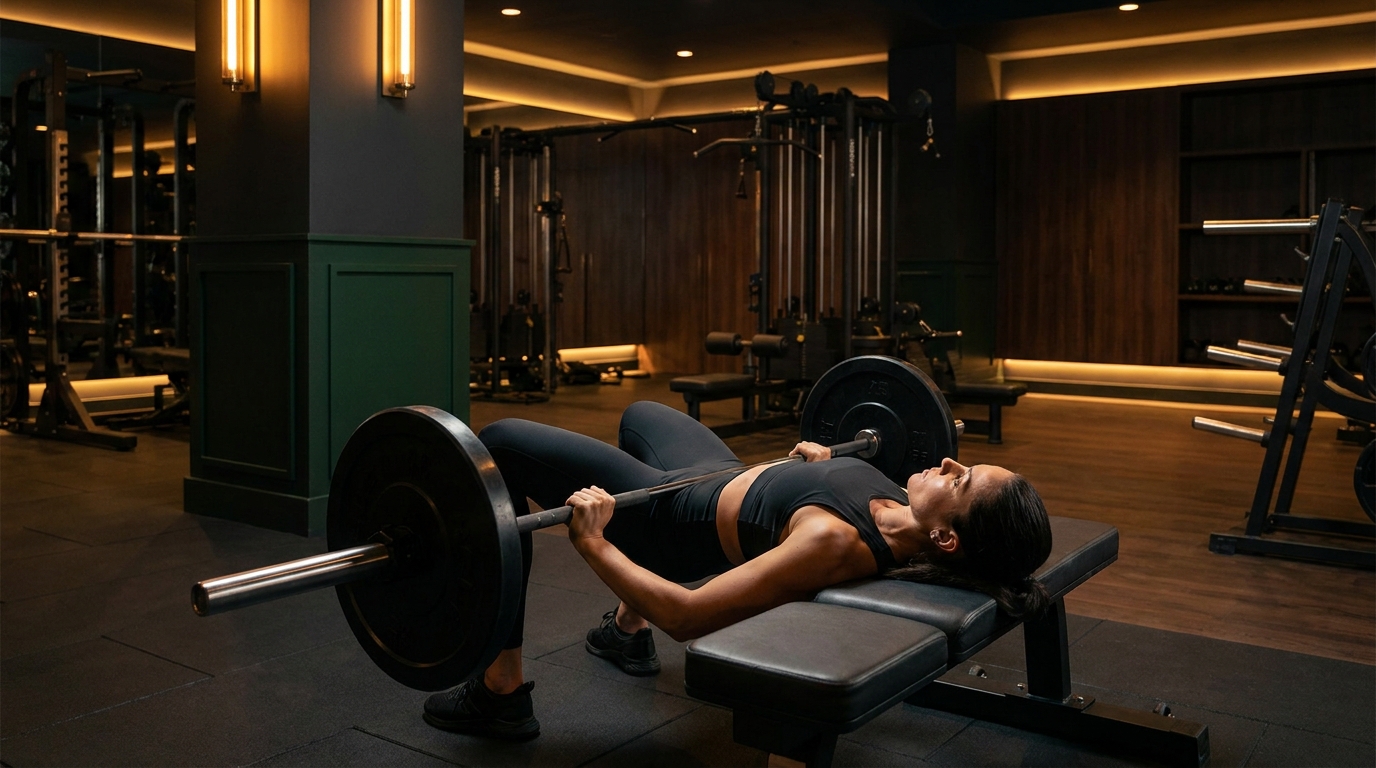
When you spend long hours seated, well-structured strength work helps you move better and finish the day with less stiffness.
If You Sit Most of the Day in Massanassa: How to Use the Gym to Reduce Back and Hip Stiffness
Author
Alphafit Team
Editorial team at Alphafit Gym Massanassa
Reviewed by
Alphafit Technical Coaching Team
Strength training and personal coaching team in Massanassa
If you finish the day with a stiff back, locked-up hips, and the feeling that your body has been folded in half for hours, it does not always mean you are lazy. A lot of the time, it means you need a better strategy.
At Alphafit Gym Massanassa, we see this pattern all the time: people spend 7, 8, or 9 hours seated, show up at the gym wanting to “undo everything,” and end up doing the exact opposite of what would help most: too much load, too much volume, and not enough progression.
The good news is that the gym really can help. But not because it punishes you harder. It helps because it gives you movement back, improves your tolerance to effort, and builds the strength base that makes daily life feel less stiff.
The gym helps, but it does not erase 8 hours in a chair
The first mistake is thinking that one hour of training automatically fixes the rest of the day. The WHO recommends 150 to 300 minutes of moderate aerobic activity per week, strength work at least 2 days per week, and reducing sedentary time whenever possible.
In practical terms, training matters a lot, but long periods of sitting still still have a cost.
That is why so many people notice the same pattern:
- stiffness when they get up from the chair,
- tight hips,
- a loaded neck and upper back,
- and the feeling that any hinge or row suddenly feels heavier than it should.
What usually gets worse when you sit all day
This is not about your back being “broken.” It is about your body adapting to what it repeats most.
If you spend most of your day seated, a few things tend to happen:
- hip flexors stay shortened for hours,
- glutes and core do less work than they should,
- the thoracic area loses mobility,
- and the lower back ends up trying to stabilize everything once you finally move.
That is when badly planned training starts to feel irritating. Not because strength work is bad, but because you are asking your body for intensity before giving it range, control, and tolerance to effort again.
The NHS back pain guidance and NICE recommendations both point in the same direction: staying active and returning to normal activities is usually better than shutting everything down, but the exercise has to match your real starting point, not your Monday-night ego.
The approach that usually works best
If you spend most of your day seated, what tends to work best is not a heroic training session. It is a simple, repeatable mix of four things.
1. Break up your seated time during the day
You do not need to turn the office into a workout class. But you do need to stop stacking endless hours without moving.
Try micro-breaks every 45 to 60 minutes:
- a 2 to 5 minute walk,
- 8 to 10 bodyweight squats,
- a bit of hip or shoulder mobility,
- a few deep breaths while standing,
- or one quick stair trip if you have access to it.
This does not replace training. It prepares you for it.
2. Do 2 or 3 strength sessions with intention
If you are new or you arrive from work already tired, your plan should not revolve around smashing your lower back. It should revolve around basic patterns that let you build several good weeks in a row:
- a squat or leg press,
- a simple hinge,
- a horizontal pull,
- a push,
- glute work,
- and anti-rotation or stability-focused core work.
For many people, a more structured gym start is far more useful than chasing advanced exercises on day one.
3. Walk more outside the gym
Steps are not just a fat-loss tool. They also help break the stiffness pattern created by long seated days. If your weeks are very sedentary, our guide on realistic step targets can help you organize this without turning it into one more impossible task.
4. Progress more slowly than your brain wants to
This is where desk-job lifters usually get it wrong: the body arrives stiff and posture-fatigued, but motivation wants to train as if everything is already moving well.
Useful progression usually looks like this:
- less load at first,
- more control,
- cleaner reps,
- and several consistent weeks before you worry about pushing harder.
For persistent low back pain, the 2021 Cochrane review concluded that exercise probably reduces pain and activity limitation compared with doing nothing or receiving usual care. It is not about the perfect session. It is about consistent exposure, sensible progression, and well-chosen movement.
Which exercises make the most sense when you arrive stiff from work
There is no magic list, but there are exercise choices that usually fit better when you spend long hours seated and want to train better without leaving the gym feeling worse.
Patterns that usually work well early on
- Goblet squat or leg press: a solid way to load the legs without demanding the technical skill of a heavy barbell from day one.
- Hip thrust or glute bridge: useful for bringing work back to the glutes and hips without forcing the lower back to do everything.
- Chest-supported row or seated row: a good way to train the back without stacking even more postural fatigue onto the day.
- Split squat or step-up: great for hip stability and single-leg control.
- Pallof press, carries, or side planks: useful core work without turning the session into endless crunches.
What not to rush
- heavy deadlifts in week one,
- long unsupported bent-over rows when you are already tight,
- training to failure all the time,
- and learning too many new things in the same session.
That does not mean forbidden. It means not yet, or not in that version, or not without earning it through progression.
A simple session example for someone who sits most of the day
If you train 2 or 3 days per week, a very reasonable session might look like this:
- 5 to 7 minutes of easy treadmill or bike
- quick hip and thoracic mobility
- goblet squat or leg press: 3 sets of 8 to 10
- seated row or chest-supported row: 3 sets of 10 to 12
- hip thrust or glute bridge: 3 sets of 8 to 10
- dumbbell or machine press: 3 sets of 8 to 10
- Pallof press or side plank: 2 to 3 sets
- 8 to 10 minutes of easy walking at the end
It is a simple plan, and that is exactly why it works better for people coming from office work, commuting, or long study hours. The goal is to stack useful weeks, not heroic sessions.
If you are also coming back from time away from training, our guide on returning to the gym after a break can help you frame that first month properly.
Mistakes that leave you feeling the same or worse
1. Trying to fix everything on day one
After eight hours seated, doing a huge session full of heavy pulls, lower-back work, and hard cardio is usually more punishment than solution.
2. Stretching a lot but strengthening very little
Mobility helps, but if you do not rebuild strength in the glutes, legs, back, and core, the stiffness keeps coming back.
3. Thinking the issue is only core weakness
A stronger core helps, yes. But reducing everything to abs usually ignores the bigger picture: hips, glutes, lats, breathing, and tolerance to movement.
4. Forcing the same exercises that already bother you
If one pattern keeps leaving you worse, you do not need to ban it forever. You need to adjust the load, range, variation, or timing.
5. Ignoring recovery
If you sit all day, sleep too little, and then train with no margin, the stiffness builds up fast. Our guide to muscle recovery after training can help make the plan work beyond the session itself.
When you should get help before loading more
There is a big difference between finishing the day stiff and improvising around a serious pain problem.
It is worth stopping the “let’s see what happens” approach and getting qualified medical input if you notice any of the following:
- sharp pain that limits walking or changing position,
- tingling or pain clearly running down the leg,
- loss of strength,
- pain after trauma,
- or symptoms that keep getting worse week after week.
In those situations, the toughest person does not win. The smartest next step does.
Conclusion: if you sit all day, the goal is not to compensate; it is to rebalance
If you spend long hours seated, the gym can be an excellent tool. But only when you stop using it as punishment for your workday and start using it for what it really is: a way to restore movement, strength, and enough physical margin to live with less stiffness.
At Alphafit Gym Massanassa, we help you build that process with intention: smart strength work, realistic progression, and a plan that fits your schedule instead of internet bravado.
Sources
- WHO guidelines on physical activity and sedentary behaviour · World Health Organization
- Low back pain and sciatica in over 16s: assessment and management · NICE
- Back pain · NHS
- Exercise for treatment of chronic low back pain · Cochrane