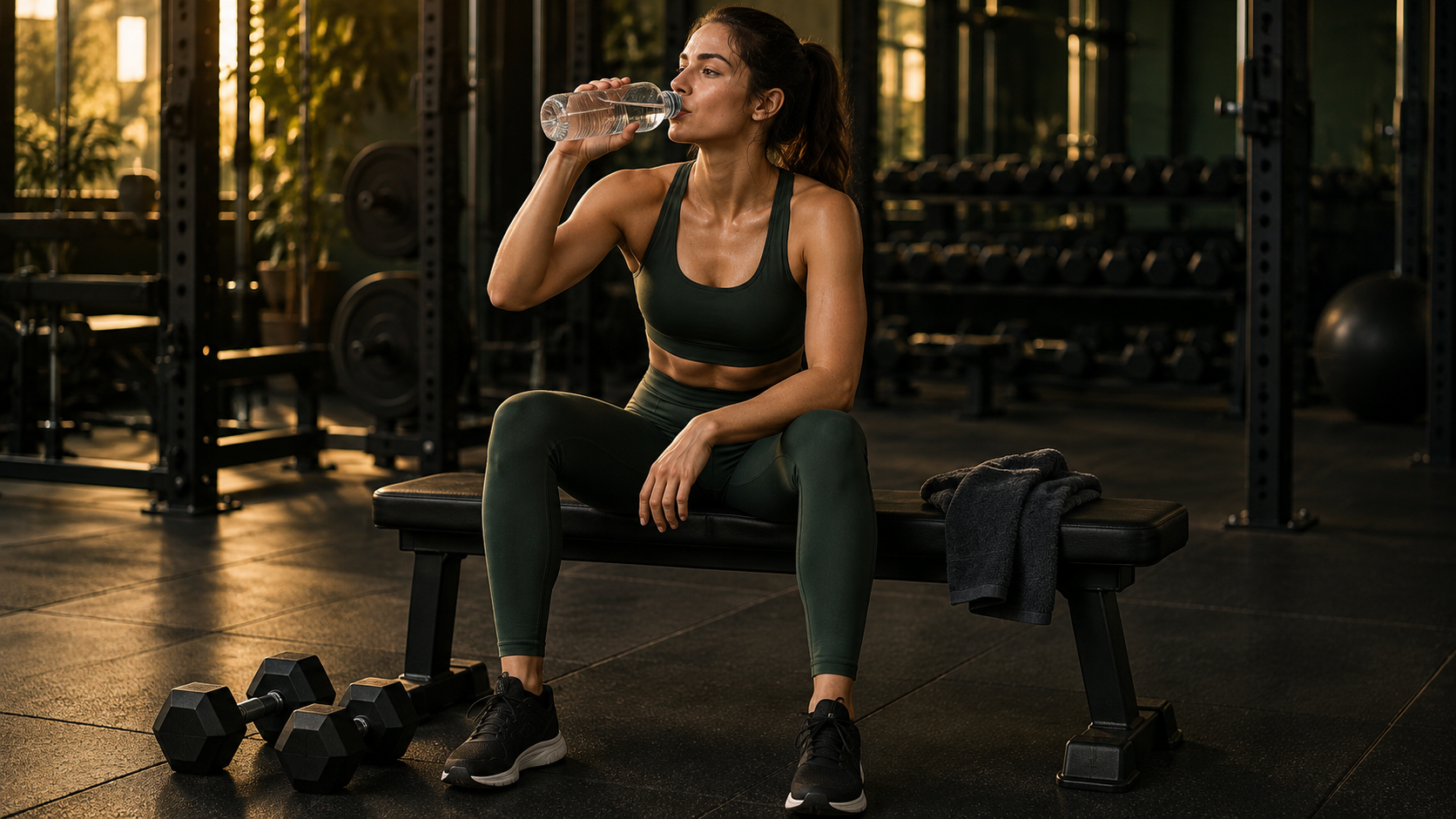
Keeping water accessible during rests helps you match your drinks to your session. AI-generated illustrative image.
Gym Hydration in Massanassa: Water and Electrolytes
Author
Alphafit Team
Editorial team at Alphafit Gym Massanassa
Reviewed by
Alphafit Technical Coaching Team
Strength training and personal coaching team in Massanassa
You arrive for a workout with a small bottle and notice someone carrying two litres of water and a sachet of electrolytes. Are you falling short? Do you need a sports drink for a weights session? The answer depends on your workout and how much you sweat, rather than the size of someone else’s bottle.
This guide helps you decide what to drink before, during and after the gym in Massanassa, with examples for strength training, cardio and hot days. The planning suggestions are practical guidance for healthy adults; physiological recommendations link to their sources. If you have a medical restriction on fluid or sodium intake, follow your individual advice.
How much water should you drink during a strength session?
There is no hourly amount that suits everyone. The NATA position statement on fluid replacement recommends an individual approach and notes that water is generally sufficient for activity lasting less than an hour under ordinary conditions.
For a typical strength session, start by keeping water accessible and using rest periods to drink according to thirst and comfort. Finishing a bottle should not become a workout target. Equally, do not ignore thirst because you still have exercises to complete.
A 500–750 ml bottle can be a convenient size to carry and refill: its capacity is not a prescribed amount to drink. Some days you will have water left; on others you may need a refill. If you regularly run out, plan where to get more before you start.
The clock does not suddenly change your needs either. Moving from 59 to 61 minutes does not automatically make water inadequate: active time, intensity, heat and sweat all matter.
Before training: make water part of your day
The NHS points out that other drinks and foods also contribute fluid. It suggests drinking regularly and using pale yellow urine as a general guide, rather than prescribing one mandatory number of litres for everyone.
Our practical suggestion is to consider how you arrive for training. If you leave work in Valencia and head straight to Massanassa, have your bottle ready beside your gym bag. If you train in the morning, leave time to drink comfortably before heading out. Avoid trying to catch up with a large drink just as you start squatting.
Urine colour is a clue, not a diagnosis or a reason to aim for completely clear urine all day. Consider thirst, circumstances and how you feel as well.
If you also arrive hungry, read our guide to what to eat before training. Choosing a drink does not replace planning your food.
During training: match the plan to the actual session
These scenarios illustrate how to organise your session; they do not prescribe fluid volumes:
| Your session | Practical starting point | What to review |
|---|---|---|
| 45–60 minutes of strength training with rests | Accessible water and opportunities to drink | Thirst, comfort and water availability |
| Strength followed by prolonged cardio | Plan drinks and breaks for the whole workout | Active duration, sweat and energy needs |
| Training on a very hot day | Make water accessible and adjust the effort | Temperature, breaks and signs of feeling unwell |
| Two demanding sessions on the same day | Plan recovery between them too | Meals, fluids and individual advice |
If drinking feels uncomfortable before an exercise, try smaller amounts during breaks and notice what you tolerate. A particularly demanding training day is not the time to experiment with a concentrated mix.
On hot days in l’Horta Sud, drinking is only part of the preparation. See our guide to training in summer heat in Massanassa as well: a drink cannot compensate for a workout poorly adapted to the temperature.
When should you consider electrolytes?
NATA describes potential benefits from adding carbohydrate or electrolytes during prolonged sessions or intense intervals, particularly in extreme environments. This does not mean everyone who lifts weights needs sachets of salts.
First describe the situation: are you training for a long time, sweating heavily, doing back-to-back sessions, or also needing energy during exercise? If these conditions recur, a sports dietitian can help you adjust your approach.
Do not choose a product simply because it says “fitness” or “premium”. Compare the label for the prepared drink: serving size, sodium, carbohydrate and any caffeine. Follow the dilution instructions; adding extra powder yourself is not a useful way to personalise hydration.
Water, sports drinks and energy drinks
These are not interchangeable. The Australian Institute of Sport explains that sports drinks combine fluid and carbohydrate to support hydration and fuelling. A sugar-free electrolyte drink does not provide that same energy function.
Before buying, make a specific choice:
- Water: a straightforward option for your usual gym session.
- Electrolyte drink: consider it when there is a need to replace salts, rather than as an automatic habit.
- Sports drink containing carbohydrate: consider it when training also calls for energy intake during exercise.
- Energy drink: check the caffeine in particular; association with sport is not a reason to choose it.
Lemon can make water more appealing. It does not turn a homemade mixture of water, lemon and an unmeasured pinch of salt into a formula matched to your needs.
After training: return to your usual food and drink routine
After a normal session, plan a regular meal and keep water available for the rest of the day. There is no need for an elaborate ritual outside the changing room.
If you will train again soon, or repeatedly finish very thirsty and exhausted, review the whole picture with a professional: drinks, food, intensity, rest and environmental conditions. A short record of several sessions can help that conversation. Note duration, heat, available drinks and how you felt; you do not need to measure everything every day.
More is not always better
NATA warns about overhydration: forcing excessive fluid intake can contribute to dangerously low blood sodium. Do not force yourself to drink litres to complete a challenge or copy somebody else.
If you feel dizzy or unwell, stop exercising and tell a member of staff. Do not assume every symptom can be fixed with more water or an electrolyte tablet. The NHS guidance on heat exhaustion and heatstroke identifies confusion, seizures and loss of consciousness as emergency signs: in Spain, call 112 and start cooling the person while help arrives. Do not give drinks to anyone who is not fully conscious.
Your next session at Alphafit
Pack a bottle, identify where you can refill it and consider whether you are doing a normal session or a long training day. Afterwards, review whether your arrangements were comfortable and what you would change next time.
If you need help adjusting the length or structure of your sessions, explore Alphafit’s services or contact our team. Bring your routine and schedule: starting with that context leads to more useful decisions than copying a water target from the internet.
Sources
- Fluid Replacement for the Physically Active · National Athletic Trainers’ Association
- Water, drinks and hydration · NHS
- Sports drinks: What is it? · Australian Institute of Sport
- Heat exhaustion and heatstroke · NHS